

Module 2: Blockchain in Depth The Power Behind Cryptocurrency
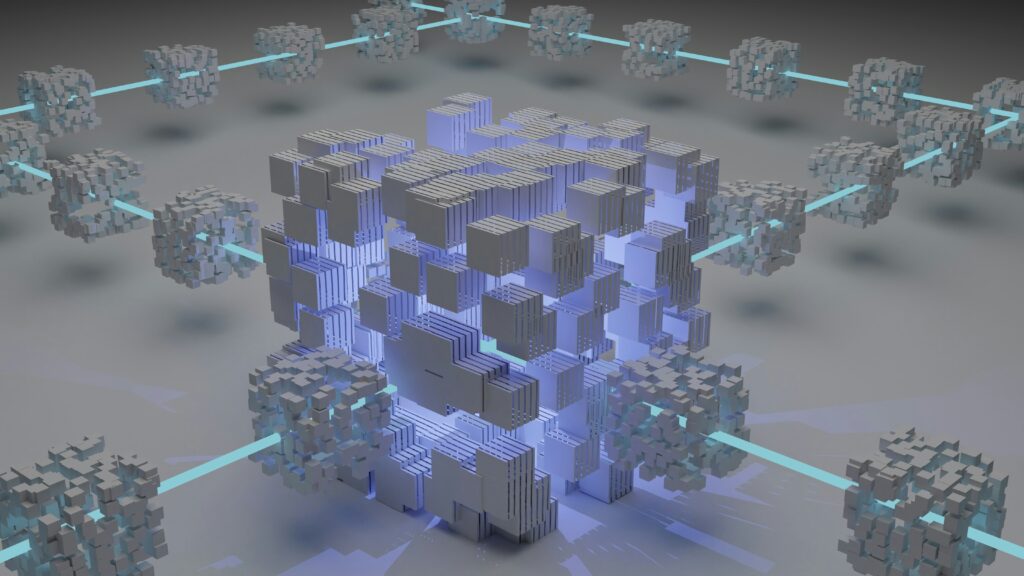
In the next module, we’ll explore how blockchain networks operate, including consensus mechanisms, miners, nodes, and how smart contracts make decentralized applications (DApps) possible
Table of Contents
The Power Behind Cryptocurrency
In Module 1, we learned what cryptocurrency is and how it works as digital money. Now it’s time to take a closer look at the actual innovation that makes all this work: blockchain technology.
Blockchain is more than a buzzword. It’s a revolutionary system that secures billions of dollars in digital assets every day, supports smart contracts, and powers everything from DeFi to NFTs.
Now, let’s get into the depths of how this works, why it matters, and how it shapes the future of finance and technology.

1. What Exactly Is a Blockchain?
A blockchain is a distributed digital ledger that records transactions across a network of computers, referred to as nodes.
Whereas most data is stored on one central server, such as a bank’s database, blockchain scatters it across thousands of independent computers worldwide.
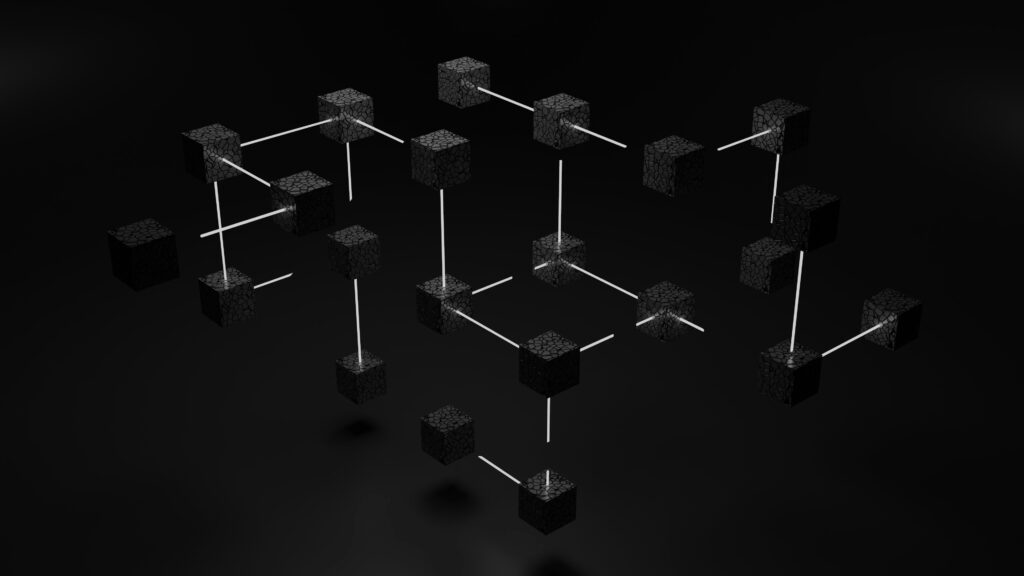
Transactions are grouped into a block, and each block connects to the previous one; that is why it’s called a chain of blocks, hence “blockchain.”
Every block contains:
A list of transactions
A timestamp
A cryptographic hash that has unique properties – a kind of fingerprint
The hash of the previous block
The aforementioned structure makes blockchain immutable: once recorded, data cannot be altered without changing every other block in the chain
2. How Blockchain Ensures Security
Blockchain applies cryptography and consensus mechanisms in order to remain secure and decentralized.
Here’s how it works:
Cryptography: Every transaction is digitally signed with private keys to ensure that only the real owner can authorise the shift of their funds.
Hashing: Every block’s data is converted into a fixed-length “hash.” If somebody tries to tamper with it, the hash changes-instantly revealing fraud.
Consensus: All nodes must agree that a transaction is valid before it’s added to the chain.
This design implies that no single entity (be it a government or a hacker) can rewrite the blockchain without the control of the majority of the network, which is nearly impossible for large blockchains, such as Bitcoin or Ethereum

3. How Transactions Work on a Blockchain
Let’s break down a typical transaction:
You start a transfer from your wallet-for example, sending 0.01 BTC to a friend.
The transaction is broadcast to the network.
This transaction is then verified by nodes using the sender’s digital signature and checking their account balance.
Transactions verified are bound together into a block.
Miners or validators, depending on the type of blockchain, then validate the block.
Once confirmed, the block is added to the chain, and the transaction becomes permanent.
Everything happens transparently and usually within seconds to minutes, with no banks or intermediaries
4. Proof of Work vs. Proof of Stake
The two most common methodologies used by blockchains to reach consensus are Proof of Work and Proof of Stake.
PoW – Proof of Work
Used by Bitcoin and early blockchains.
Miners compete in solving complex mathematical puzzles.
The winner adds the next block and earns rewards, such as new Bitcoin.
It is a high-energy and computation-power procedure but it’s very secure.
Proof of Stake
Used by newer networks like Ethereum 2.0, Cardano, and Solana.
Validators lock up (“stake”) their coins as collateral.
Validators are randomly chosen by the system to create and attest blocks.
This uses far less energy and allows faster transactions.
Both techniques intend to maintain trust without central authority intervention, but generally, PoS is considered more efficient and environmentally friendly


5. Types of Blockchains
Not all blockchains are the same. They differ based on who can access or modify the data.
| Type | Description | Example |
|---|---|---|
| Public Blockchain | Open to everyone; anyone can participate and verify transactions. | Bitcoin, Ethereum |
| Private Blockchain | Controlled by one organization; access is restricted. | Hyperledger, RippleNet |
| Consortium Blockchain | Managed by a group of organizations working together. | R3 Corda, Energy Web Chain |
| Hybrid Blockchain | Combines features of both public and private systems. | Dragonchain |
6. Smart Contracts — The Brains Behind Decentralization
A major evolution in blockchain technology came with smart contracts: self-executing programs that automatically run when certain predefined conditions are met.
For example:
If Alice sends 1 ETH, release the NFT to her wallet.
Smart contracts power:
Defi apps, such as Uniswap, Aave, and Compound
NFT marketplaces
Decentralized gaming and metaverse platforms
They make blockchain programmable, which allows developers to build entire financial ecosystems on top of it
7. Nodes, Miners and Validators
Each blockchain network is a digital community of participants:
Nodes: These are computers that store and update copies of the blockchain.
PoW: miners compete in creating new blocks to earn rewards.
Validators (PoS): They validate the transactions and maintain the network. In return, they get paid staking rewards.
They work together to ensure the blockchain is up-to-date, secure, and decentralized — regardless if thousands of users join or drop off the network each day
8. Scalability and Layer 2 Solutions
Scalability-aatchments being able to handle more transactions without slowing down-is considered one of blockchain’s biggest challenges. Where Bitcoin can process approximately 7 transactions per second, Visa handles thousands. In fixing this, the developers made something called Layer 2 solutions, including:
Lightning Network Bitcoin offers instant, low-fee payments off-chain.
Polygon (Ethereum): It decreases congestion by processing transactions on a sidechain. These technologies improve speed and lower the costs, all while keeping blockchain secure
9. Practical Applications of Blockchain
Blockchain isn’t just about crypto trading. The use cases of blockchain are varied across industries:
Finance: Instant cross-border settlements; transparent audits.
Supply Chain: Tracking goods from factory to customer.
Healthcare: Sharing patient data securely.
Voting Systems: Tamper-proof and transparent elections.
Digital Identity: Self-sovereign IDs controlled by users themselves. With increasing adoption, blockchain might change how the world thinks about trust and information
10. The Future of Blockchain
We are still at an early stage in the evolution of blockchain.
Next-generation technologies, such as:
Interoperability, meaning blockchains talking to one another Zero-knowledge proofs (privacy without sacrificing transparency)
Decentralized AI & storage: combining Web3 with new tech will push blockchain far beyond crypto trading-into governance, business operations, and digital ownership
...Last but Not Least
Blockchain forms the backbone of the crypto revolution: trust without middlemen, transparency in every transaction, and empowering anyone with an internet connection to take part in the global economy. Understanding blockchain means understanding why cryptocurrencies exist and why they’re transforming the world. In the next chapter of our BitxEdge “Learn Crypto Basics” series, we’ll move to Module 3: Understanding Wallets and Keys — where you’ll learn how to store, protect, and manage your digital assets safely